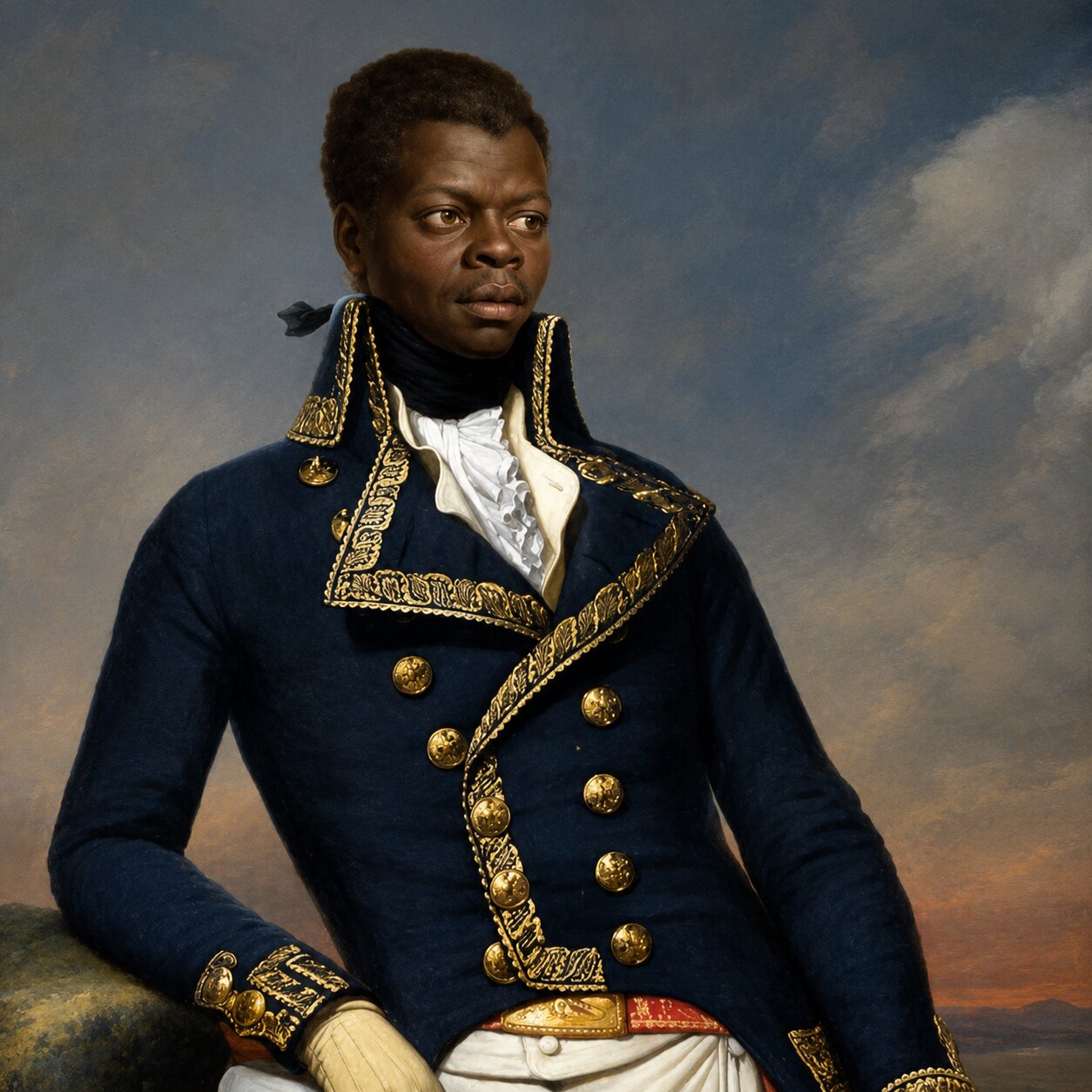
François-Dominique Toussaint L'Ouverture was born around 1743 on the plantation of Bréda in Saint-Domingue — the French colony that would become Haiti. His father, Hyppolite, was the son of an African chief from the Allada kingdom in what is now Benin. Toussaint was an enslaved man but was given unusual privileges by his plantation manager, learning to read and write and eventually being made a livestock overseer.
When the Haitian Revolution broke out in 1791 — the largest slave uprising in history — Toussaint initially stayed out of the conflict. But he soon joined the rebel forces and his military genius rapidly became apparent. He trained and led a disciplined army, studied the writings of Julius Caesar and adopted sophisticated tactical and strategic approaches that confounded his opponents.
Toussaint L'Ouverture — the name means 'the one who makes an opening' — fought against Spanish, British and eventually French forces, defeating them all. He abolished slavery in Saint-Domingue in 1801 and drafted a constitution that made him Governor-for-Life, while nominally remaining within the French empire.
Napoleon Bonaparte, threatened by the prospect of a free Black republic in the Caribbean, sent an army of 20,000 men to restore French control and reinstate slavery. Toussaint was lured into a meeting under a flag of truce, arrested and transported to France, where he was imprisoned in the cold mountain fortress of Fort de Joux.
Toussaint L'Ouverture died in his prison cell on 7 April 1803, of pneumonia and exhaustion. But his revolution did not die with him. His lieutenants continued the fight and on 1 January 1804, Haiti declared independence — becoming the first Black republic in the world and the first nation in the Western Hemisphere to permanently abolish slavery.
- Led the only successful slave revolution in history
- Defeated armies from Spain, Britain and France — three of the world's greatest military powers
- Abolished slavery in Saint-Domingue in 1801
- Drafted Saint-Domingue's first constitution
- His revolution directly led to the creation of Haiti — the world's first Black republic (1804)
- Inspired slave rebellions and abolition movements across the Americas
- Study your enemy.. Toussaint read Julius Caesar and applied classical military strategy to defeat professionally trained European armies. Knowledge of your opponent is a weapon.
- Discipline wins wars.. His forces were enslaved people who became one of the most effective armies in the Caribbean. Discipline and training transformed them.
- The cause outlives the leader.. Toussaint died in prison, but his revolution succeeded. Plant seeds you may not live to see grow.
- Words are weapons.. His defiant statement on arrest — 'It will spring back from the roots' — became one of history's most powerful declarations of resistance.