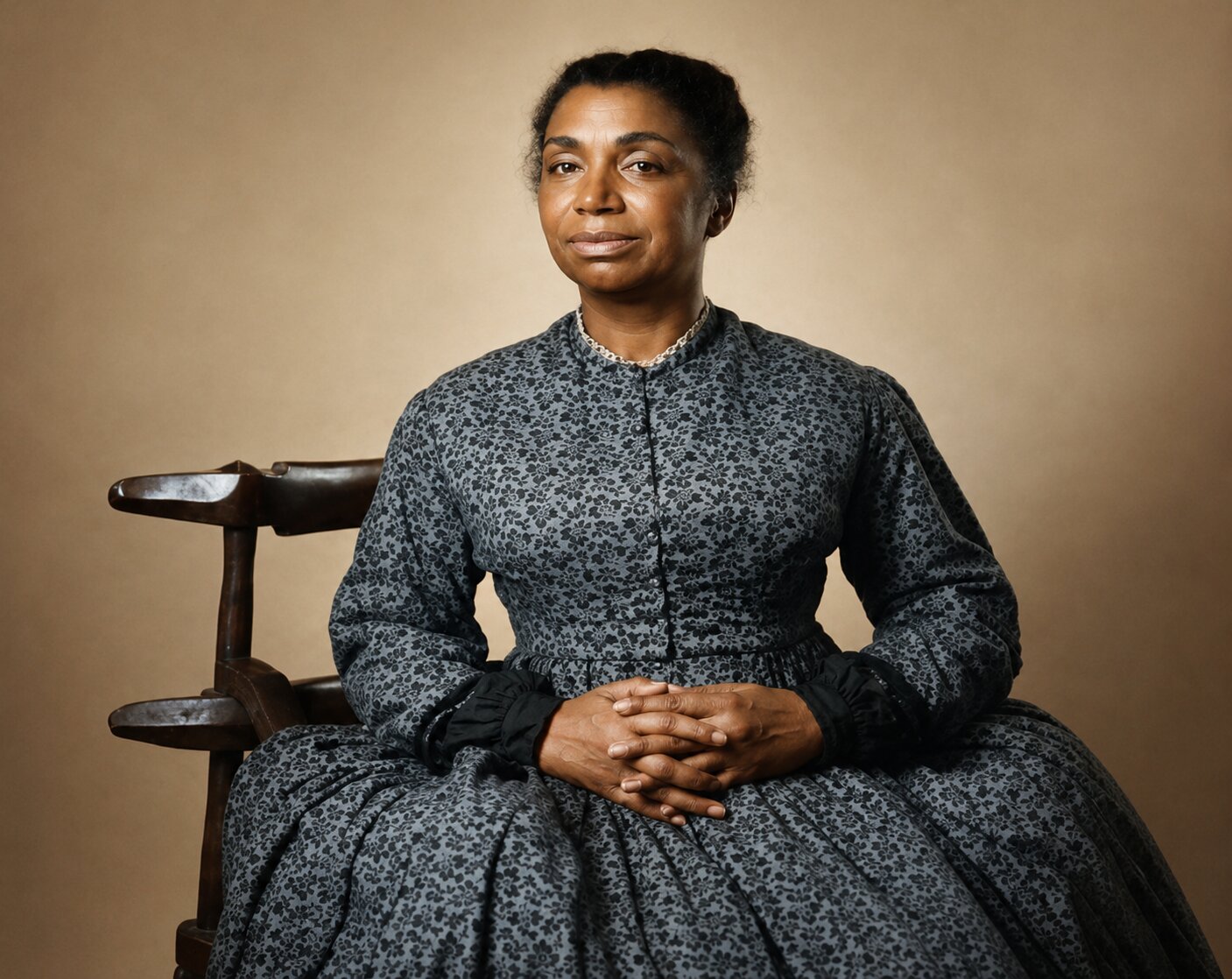
Mary Prince was born into slavery in Bermuda around 1788. She was sold multiple times throughout her childhood and youth, enduring brutal treatment across several Caribbean islands including Turks Island and Antigua. She witnessed and experienced the full horror of slavery — forced labour, violent punishment and the constant threat of separation from those she loved.
In 1828, Mary travelled to London with her owners, Mr and Mrs Wood. It was in London that she found her opportunity for freedom. She left the Woods' household and took shelter with the Moravian Church in Hatton Garden, who introduced her to the Anti-Slavery Society. There she met Thomas Pringle, Secretary of the Society, who helped her tell her story.
In 1831, The History of Mary Prince, A West Indian Slave was published — the first narrative of the life of an enslaved Black woman ever to be published in Britain. The book was an immediate sensation, going through three editions within a year. It put a human face on the horrors of slavery at a time when the abolitionist movement was building towards its peak.
Mary Prince also presented a petition to Parliament — signed by supporters — calling for her freedom and the abolition of slavery. She was the first Black woman to do so. Her testimony was read into the parliamentary record and contributed to the growing pressure that led to the Slavery Abolition Act of 1833.
After 1833, Mary Prince disappears from the historical record. Her date and place of death are unknown. But her autobiography — and her courage in telling her story publicly at enormous personal risk — left a legacy that has endured for nearly two centuries.
- First Black woman to publish an autobiography in Britain (1831)
- First Black woman to present an anti-slavery petition to the British Parliament
- Her testimony directly contributed to the passage of the Slavery Abolition Act 1833
- The History of Mary Prince went through three editions within a year of publication
- Her book remains one of the most important documents of the anti-slavery movement
- Your story is your most powerful weapon.. Mary Prince's autobiography moved more hearts and minds than any political speech. Truth, told personally, is unstoppable.
- Courage is not the absence of fear.. Mary told her story knowing her owners could pursue her. She did it anyway.
- Find your allies.. The Anti-Slavery Society and Thomas Pringle gave Mary a platform. Building the right relationships amplifies impact.
- One voice can change the law.. Mary's petition was part of the wave that led to the Slavery Abolition Act of 1833.